Aakhyān — Hear what matters

Aakhyān is an AI-powered patient communication platform that converts oncology discharge summaries into voice messages in Bengali, Hindi, English, and Assamese, delivered via WhatsApp. Built at Silchar Cancer Centre in Assam, India, Aakhyān follows patients through the post-discharge recovery window with structured voice messages, medication adherence nudges, follow-up reminders, and on-demand information access.

Unlike systems that use large language models to generate patient-facing text, Aakhyān uses deterministic, clinician-reviewed Jinja2 templates. No AI-generated text reaches the patient. A 1,809-medication verified drug lexicon with three-tier fallback ensures accuracy. Every message is approved by the treating clinician before delivery.

The Journey In

A prescription is written.

A Discharge is signed.

Between here and home,

the words will change shape —

three medicines become two,

“before food” becomes “after food,”

and the things that mattered most…

are forgotten by the time

the auto-rickshaw turns the corner.

The distance is not mere kilometres.

It is also Language.

The Hospital

Picture a lady accompanying a patient

She can read every word

on the discharge paper.

Still she does not know

which pill to give first,

or what “BBF” means,

or why this one

must be taken along with food.

And what was that test the doctor

asked to do before next visit again??

She will not ask again.

The doctor was kind but busy,

and the queue behind her

was long.

Discharge communication deficits affect 78% of patients, with only 47% recall of key instructions at 48 hours. Add a language barrier, and the paper becomes entirely unreadable.

— Makaryus & Friedman, 2005; Horwitz et al., 2013

The Home

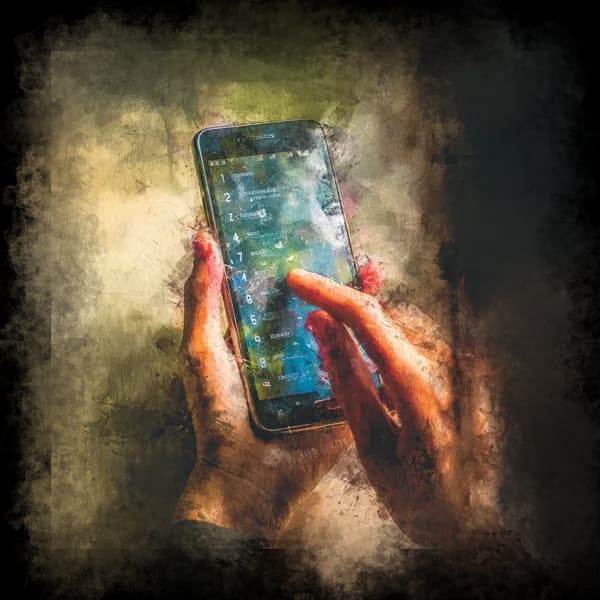
Then her phone rings.

A voice begins —

clear, familiar, sure.

নমস্কাৰ…

নমস্কার…

नमस्ते…

Hello…

Assam

Aakhyān was born

in the Barak Valley of Assam

at Silchar Cancer Centre —

Assam

where the Brahmaputra runs wide,

the hills hold the monsoon close,

… and a discharge summary

is written in English

for a patient who speaks

only Assamese.

An AI that transforms

what the doctor writes

into what the patient

needs to hear.

No hallucination. No jargon.

Just clarity, in the mother tongue.

আখ্যান

Pan-India

India

22 official languages.

1,600 mother tongues.

A billion patients

who leave the hospital

with a paper

they cannot act on.

Aakhyān speaks their language,

the prescription does not.

Every hospital.

Every discharge.

Every patient who deserves

to understand.

The evidence

Aakhyan does.

How Aakhyān works

Zero-hallucination architecture

Dual-pass extraction with field-level diff — like double data entry in clinical research. 1,809 medications in a verified drug lexicon with three-tier fallback. Deterministic, clinician-reviewed templates. No AI-generated text reaches the patient. In benchmarking: zero major hallucinations versus GPT-4’s six.

Voice in every language

Bengali, Hindi, English, Assamese — delivered as WhatsApp voice messages. Community vocabulary registers tuned by region, not just translated. A custom Assamese grapheme-to-phoneme engine — the first built for healthcare voice delivery. Simplified English register for tribal populations.

The safety pipeline

Ingestion → De-identify → AI Extract → Risk + Approve → Template Render → Voice + Deliver. Seven layers of safety. RED/AMBER/GREEN risk stratification for every discharge. Opioids, anticoagulants, insulin flagged RED automatically.

Frequently asked questions

Is the system hallucination-free?

Aakhyān does not use LLM-generated text in patient-facing output. Discharge instructions are rendered through deterministic, clinician-reviewed templates that have been approved by oncologists and clinicians. The AI extracts structured data from discharge summaries — the template converts that data into natural-language instructions. No generative text reaches the patient.

Which languages does Aakhyān currently support?

Aakhyān currently generates discharge instructions in Bengali, Hindi, English, and Assamese, all delivered as WhatsApp voice messages. The system is designed to expand to additional Indian languages as the platform scales beyond the pilot.

What happens when a drug isn’t in the lexicon?

If a medication is not yet in Aakhyān’s verified drug lexicon, the system flags it for clinician review. The drug’s brand name is preserved as-is, and every message is reviewed by the treating clinician before delivery. The clinician can edit, correct, or reject any instruction before it reaches the patient. No message is ever sent without clinician approval.

What’s the cost per patient?

During the pilot at Silchar Cancer Centre, Aakhyān is provided at no cost to the institution or the patient. At scale, the system costs INR 100–150 per patient (approximately USD 1.20–1.80) — comparable to the cost of one blood test. This covers the full communication sequence: discharge comprehension, medication adherence nudges, follow-up reminders, and on-demand information access. The project is principal-investigator initiated and self-funded.

How is patient data protected under DPDPA?

Discharge summary photographs are captured in-app and not saved to the device camera roll. Patient identifiers — names, addresses, contact details, and hospital IDs — are algorithmically redacted before any external API call. Only de-identified clinical content is processed using secure, access-controlled AI services. No patient names, contact details, or identifying information are ever exposed to external systems. Voice messages are delivered directly to the patient’s registered WhatsApp number. All processing complies with the Digital Personal Data Protection Act, 2023.

Can another hospital join the pilot?

The current pilot is at Silchar Cancer Centre. Onboarding a new centre is straightforward — no integration with existing hospital systems is required for basic deployment. If you represent a hospital or cancer centre, please reach out through our contact form.

Does Aakhyān support only cancer patients?

Currently, yes. Aakhyān is designed and validated for oncology discharge summaries, where the complexity of multi-drug regimens — chemotherapy, immunotherapy, targeted therapy, and hormonal therapy — and the consequences of misunderstanding are highest. We have long-term plans to extend the platform to other specialities where discharge communication gaps affect patient outcomes.

Does Aakhyān only send messages at discharge?

No. Aakhyān continues through the post-discharge recovery window — 30 days in the current pilot protocol. Day 0 is six structured voice messages explaining the discharge summary. Days 1–3 bring risk-stratified medication adherence nudges. An on-demand keyword reply menu is available any time — the patient texts a number to hear their medicines, hospital contact, follow-up details, or diet advice. Two days before follow-up, verified reminders arrive with department, tests, and fasting instructions. A day-before availability check (currently in pilot phase) verifies doctor and equipment availability to prevent wasted journeys.

Does the patient need to install an app?

No. Everything works through WhatsApp, which the vast majority of Indian smartphone users already have. Voice messages, medication nudges, follow-up reminders, and the on-demand information menu all arrive as standard WhatsApp messages. The reply commands (1 for medicines, 2 for hospital, etc.) use simple text replies — no app, no login, no learning curve.

Clinical trial

Aakhyān is undergoing a pilot randomized controlled trial at Silchar Cancer Centre, Assam, India. 100 oncology patients (50 intervention, 50 standard care) will be evaluated on discharge instruction comprehension at 48-72 hours post-discharge using structured teach-back assessment across five domains: medication identity, dosing schedule, food interactions, warning signs, and follow-up plan.

The system costs INR 100-150 per patient (approximately USD 1.20-1.80) — comparable to the cost of one blood test. The project is principal-investigator initiated and self-funded.

AakhyānHear your Instructions…Hear what Matters…
Scroll to explore
A prescription is written.
A Discharge is signed.
 
Between here and home,
the words will change shape —
three medicines become two,
“before food” becomes “after food,”
and the things that mattered most…
are forgotten by the time
the auto-rickshaw turns the corner.
 
The distance is not mere kilometres.
It is also Language.
Picture a lady accompanying a patient
 
She can read every word
on the discharge paper.
 
Still she does not know
which pill to give first,
or what “BBF” means,
or why this one
must be taken along with food.
 
And what was that test the doctor
asked to do before next visit again??
 
She will not ask again.
The doctor was kind but busy,
and the queue behind her
was long.
Discharge communication deficits affect 78% of patients, with only 47% recall of key instructions at 48 hours. Add a language barrier, and the paper becomes entirely unreadable.
Then her phone rings.
A voice begins —
clear, familiar, sure.
 
নমস্কাৰ…
নমস্কার…
नमस्ते…
Hello…
Instead of …
She hears …
Tab. Capecitabine 500mg 3-0-3 post meals × 14 days Stop 7 days. Repeat cycle. HFS Gr ≥2 → D/C & report
কেপচিটাবিন টেবলেট — এইটো chemotherapy-ৰ দৰোৱ। ৰাতিপুৱা তিনিটা আৰু ৰাতি তিনিটা বড়ি আহাৰৰ পাছত খাব, চৌদ্দ দিনলৈ। তাৰ পাছত সাত দিন বন্ধ ৰাখিব। হাতৰ তলুৱা বা ভৰিৰ তলুৱা ৰঙা পৰিলে, ফুলিলে বা বিষ হ’লে — দৰোৱ লগে লগে বন্ধ কৰক আৰু ডাক্তৰক জনাওক।
ক্যাপেসিটাবিন ট্যাবলেট — এটি কেমোথেরাপির ওষুধ। সকালে তিনটা আর রাতে তিনটা বড়ি খাবেন খাওয়ার পরে, টানা চৌদ্দ দিন। তারপর সাত দিন বন্ধ রাখবেন। হাতের তালু বা পায়ের তলায় লাল হলে, ফুললে বা ব্যথা হলে — ওষুধ বন্ধ করুন এবং সাথে সাথে ডাক্তারকে জানান।
कैपेसिटाबिन गोली — यह कीमोथेरेपी की दवाई है। सुबह तीन और रात को तीन गोलियाँ खाना खाने के बाद लें, लगातार चौदह दिन। फिर सात दिन बंद रखें। हथेलियों या पैरों के तलवों में लालिमा, सूजन या दर्द हो तो — दवाई तुरंत बंद करें और डॉक्टर को बताएँ।
Hear the message
আখ্যানAakhyānआख्यान
— The Narrative that Heals
Aakhyān was born
in the Barak Valley of Assam
at Silchar Cancer Centre —
 
Assam
 
where the Brahmaputra runs wide,
the hills hold the monsoon close,
… and a discharge summary
is written in English
for a patient who speaks
only Assamese.
 
An AI that transforms
what the doctor writes
into what the patient
needs to hear.
 
No hallucination. No jargon.
Just clarity, in the mother tongue.

Our Vision

India
 
22 official languages.
1,600 mother tongues.
 
A billion patients
who leave the hospital
with a paper
they cannot act on.
 
Aakhyān speaks their language,
the prescription does not.
 
Every hospital.
Every discharge.
Every patient who deserves
to understand.
They reached home. They heard the message. They understood.
But the discharge was only the first day.
What about the next day, the next week, the rest of the month?

Beyond the hospital wall,
the voice continues.

Five moments when Aakhyan speaks — and the patient is not alone.

Discharge Comprehension — Day 0
Day 0
Discharge Comprehension
Day Zero.
She reaches home.
The phone rings.
 
Six voice messages arrive — each one
a thread of the discharge paper,
unraveled into words she knows.
 
Her medicines. Her safety warnings.
Her diet. Her wound care.
A menu she can call back
whenever memory fades.
6 structured voice messages · Medication explainer · Safety + follow-up · Diet · Wound care · Replayable command menu
Medication Adherence — Day 1–3
Day 1–3
Medication Adherence
Day One.
Morning.
 
A gentle nudge arrives:
Have you taken your medicine today?
 
Not a reminder from a system.
A reminder from someone
who remembers what the doctor said.
 
For the ones at higher risk,
it comes sooner. Day One, Day Three.
For others, Day Two is enough.
 
The system knows the difference.
The patient feels the care.
Risk-stratified medication nudges · HIGH risk: Day 1 + Day 3 · NORMAL risk: Day 2 · Personalized, not generic
Information Access — On-Demand
On-Demand
Information Access
Any day.
Any hour.
 
She forgets the name of a medicine.
She types: 1.
 
The answer comes.
When is follow-up? 3.
Replay everything? 4.
The diet instructions? 5.
 
Not an app to learn.
Not a chatbot to argue with.
A number. An answer.
In her language.
Keyword reply menu · 1 = medicines · 2 = hospital · 3 = follow-up · 4 = replay all · 5 = diet · 0 = stop · No app required
Follow-Up Continuity — 2 Days Before
2 Days Before
Follow-Up Continuity
Two days before follow-up.
A message arrives.
 
Not just “Your appointment is Tuesday.”
 
Which department.
Which floor.
What tests to bring.
Whether to fast.
 
Because she traveled six hours last time
and was turned away
for not bringing the right report.
 
That will not happen again.
Verified follow-up reminders · Department + floor · Required tests + reports · Fasting instructions · Fires only after clinician verifies dates
Daily Availability & Patient Notification — 1 Day Before
1 Day BeforePILOT PHASE
Daily Availability & Patient Notification
The evening before.
One last check.
 
The doctor is on leave tomorrow.
The PET-CT machine is down.
She would have traveled six hours
to find out at the counter.
 
Now she knows before she leaves home.
 
A simple question:
“Is my doctor available tomorrow?”
If the answer matters —
she hears it tonight.
Day-before availability check · Doctor + equipment status · Prevents wasted journeys · PILOT PHASE

78% of patients leave the hospital with at least one thing they did not understand.
Verbal explanations alone? Only 47% is retained.
Half of what the doctor said is gone by the time the patient reaches home.
No existing system follows the patient after discharge.
Aakhyan does.

How it stays safe

Image Capture

Image Capture

PII Redaction

PII Redaction

AI Extraction

AI Extraction

Template Rendering

Template Rendering

Clinician Review

Clinician Review

Voice Delivery

Voice Delivery

Zero-hallucination templates

Deterministic, clinician-reviewed templates approved by oncologists, surgeons and clinicians. No AI-generated text reaches the patient.

Voice in every language

Bengali, Hindi, English, Assamese — delivered as WhatsApp voice messages via advanced text-to-speech technology.

100-patient pilot at Silchar Cancer Centre

Evaluating discharge comprehension, medication adherence, and follow-up continuity.

Register your interest

Pilot randomized trial · IEC application submitted · 30-day pilot follow-up · DPDPA-compliant


Is the system hallucination-free?

Aakhyān does not use LLM-generated text in patient-facing output. Discharge instructions are rendered through deterministic, clinician-reviewed templates that have been approved by oncologists and clinicians. The AI extracts structured data from discharge summaries — the template converts that data into natural-language instructions. No generative text reaches the patient.


Which languages does Aakhyān currently support?

Aakhyān currently generates discharge instructions in Bengali, Hindi, English, and Assamese, all delivered as WhatsApp voice messages. The system is designed to expand to additional Indian languages as the platform scales beyond the pilot.


What happens when a drug isn’t in the lexicon?

If a medication is not yet in Aakhyān’s verified drug lexicon, the system flags it for clinician review. The drug’s brand name is preserved as-is, and every message is reviewed by the treating clinician before delivery. The clinician can edit, correct, or reject any instruction before it reaches the patient. No message is ever sent without clinician approval.


What’s the cost per patient?

During the pilot at Silchar Cancer Centre, Aakhyān is provided at no cost to the institution or the patient. At scale, the system costs INR 100–150 per patient (approximately USD 1.20–1.80) — comparable to the cost of one blood test. This covers the full communication sequence: discharge comprehension, medication adherence nudges, follow-up reminders, and on-demand information access. The project is principal-investigator initiated and self-funded.


How is patient data protected under DPDPA?

Discharge summary photographs are captured in-app and not saved to the device camera roll. Patient identifiers — names, addresses, contact details, and hospital IDs — are algorithmically redacted before any external API call. Only de-identified clinical content is processed using secure, access-controlled AI services. No patient names, contact details, or identifying information are ever exposed to external systems. Voice messages are delivered directly to the patient’s registered WhatsApp number. All processing complies with the Digital Personal Data Protection Act, 2023.


Can another hospital join the pilot?

The current pilot is at Silchar Cancer Centre. Onboarding a new centre is straightforward — no integration with existing hospital systems is required for basic deployment. If you represent a hospital or cancer centre, please reach out through our contact form.


Does Aakhyān support only cancer patients?

Currently, yes. Aakhyān is designed and validated for oncology discharge summaries, where the complexity of multi-drug regimens — chemotherapy, immunotherapy, targeted therapy, and hormonal therapy — and the consequences of misunderstanding are highest. We have long-term plans to extend the platform to other specialities where discharge communication gaps affect patient outcomes.


Does Aakhyān only send messages at discharge?

No. Aakhyān continues through the post-discharge recovery window — 30 days in the current pilot protocol. Day 0 is six structured voice messages explaining the discharge summary. Days 1–3 bring risk-stratified medication adherence nudges. An on-demand keyword reply menu is available any time — the patient texts a number to hear their medicines, hospital contact, follow-up details, or diet advice. Two days before follow-up, verified reminders arrive with department, tests, and fasting instructions. A day-before availability check (currently in pilot phase) verifies doctor and equipment availability to prevent wasted journeys.


Does the patient need to install an app?

No. Everything works through WhatsApp, which the vast majority of Indian smartphone users already have. Voice messages, medication nudges, follow-up reminders, and the on-demand information menu all arrive as standard WhatsApp messages. The reply commands (1 for medicines, 2 for hospital, etc.) use simple text replies — no app, no login, no learning curve.